
A Guide to Myrrh in Perfume.
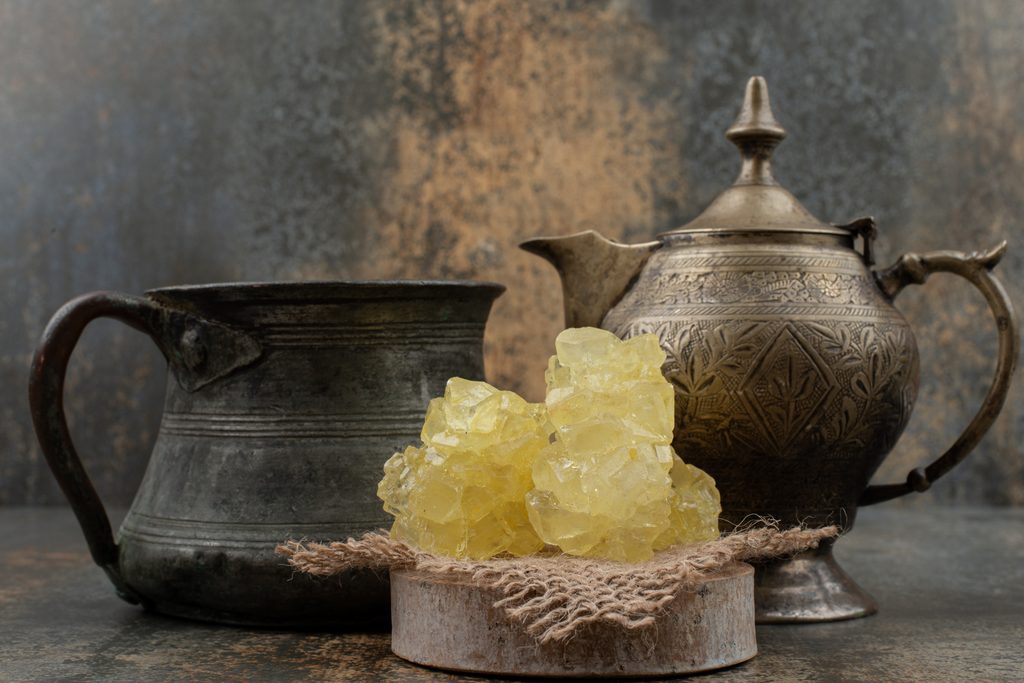
You’ve probably heard of myrrh, particularly around Christmas, but do you know what it actually smells like?
It’s one of the oldest fragrance ingredients still used today, with a history stretching back thousands of years. Myrrh has a distinctive scent that works particularly well in richer perfumes and you might be surprised to learn that it comes from trees.
If you’re curious about myrrh perfumes, keep reading to learn where the ingredient comes from, how perfumers use it and which other fragrance notes work well with it.
What Does Myrrh Smell Like in Perfume?
Myrrh has an intoxicating warm, resinous scent with earthy, slightly smoky characteristics. It can also smell mildly bitter, medicinal or sweet, with some varieties having a liquorice-like aroma. In perfume, myrrh is commonly used to create rich amber fragrances, often alongside vanilla, woods or other aromatic resins.
Where Myrrh Comes From
Myrrh comes from trees belonging to the Commiphora genus, particularly Commiphora myrrha, which grows in parts of East Africa and the Arabian Peninsula.
The resin is collected by making small cuts in the tree’s bark, where a sticky substance emerges and gradually hardens into reddish-brown pieces, traditionally called resin tears.
Once harvested, this resin can be processed into ingredients for fragrances.
Steam distillation produces myrrh essential oil, while solvent extraction can produce richer resin extracts. These different preparations give perfumers a choice of aromas, depending on the fragrance they’re creating.
Interestingly, the word myrrh is associated with an ancient Semitic word meaning bitter, which reflects one of the resin’s recognisable characteristics.
Why Myrrh Is Associated With Christmas
Myrrh is famously mentioned in the biblical account of the Three Wise Men, who brought gold, frankincense and myrrh as gifts to the infant Jesus.
But myrrh was already a valuable substance long before that story.
Ancient Egyptians used myrrh in incense preparations and embalming, while the Greeks and Romans also valued it for fragrance. Myrrh was traded along routes connecting East Africa, Arabia and the Mediterranean, where aromatic resins were highly prized.
Its use in religious incense helps explain why myrrh remains associated with Christmas and traditional church fragrances.
And although its history is fascinating, myrrh is still a useful ingredient in modern perfumery, particularly in winter fragrances filled with amber and incense notes.
Using Myrrh in Perfume
Myrrh is often used in the heart or base of a fragrance thanks to its resinous aroma, which works perfectly with ingredients that have a similar warm character.
Its slightly bitter quality can also be useful in sweeter compositions. For example, when myrrh is combined with vanilla or tonka bean, the sweetness of those notes can soften its sharper characteristics.
Perfumers may use natural myrrh oil, resin extracts or a fragrance accord that recreates its aroma. Seeing myrrh listed in a perfume’s notes doesn’t necessarily mean the formula contains natural myrrh resin.
The Perfume Notes That Work Well With Myrrh
You’ll often find myrrh alongside ingredients that complement its warm, resinous aroma.
- Tonka bean – Its sweet, almond-like scent works well with myrrh’s slightly bitter character.
- Vanilla – Adds sweetness and can make a myrrh fragrance smell creamier.
- Frankincense – Introduces a different incense character, with brighter, pine-like qualities.
- Sandalwood – Its creamy woody aroma complements myrrh’s warmth.
- Rose – Creates a floral contrast against the resin’s earthy scent.
- Oud – Works well with myrrh in stronger woody fragrances, where both notes contribute to a rich, resinous aroma.
If you’re new to myrrh, a fragrance that combines it with tonka bean or vanilla is a good starting point. The sweetness makes the resin’s more unusual characteristics easier to appreciate.
A Vegan Myrrh Perfume to Try
If you’d like to find out how myrrh smells in a finished fragrance, Myrrh & Tonka inspired perfume is a good place to start.
Myrrh is paired with tonka bean and vanilla, giving the fragrance a rich, sweet character while retaining the resinous qualities of myrrh.
Tonka bean has a warm aroma with hints of almond and vanilla, making it a particularly good match for myrrh. The combination is ideal if you already enjoy sweet amber perfumes and want to try something with a more distinctive resinous note.
It’s also a lovely fragrance for autumn and winter, when richer scents like Oud and musk tend to get popular.
This version of the perfume is 100% vegan and cruelty-free, so you can enjoy this classic fragrance combination in an affordable designer-inspired perfume.
Discover Delicious Perfumes With Myrrh
Myrrh has been used in fragrance for thousands of years, and its distinctive aroma still has plenty to offer modern perfume lovers.
If you enjoy amber fragrances or woody perfumes, myrrh is an ingredient worth getting to know. Look for it alongside tonka bean if you prefer sweeter scents, or explore fragrances with incense and oud for a stronger resinous character.